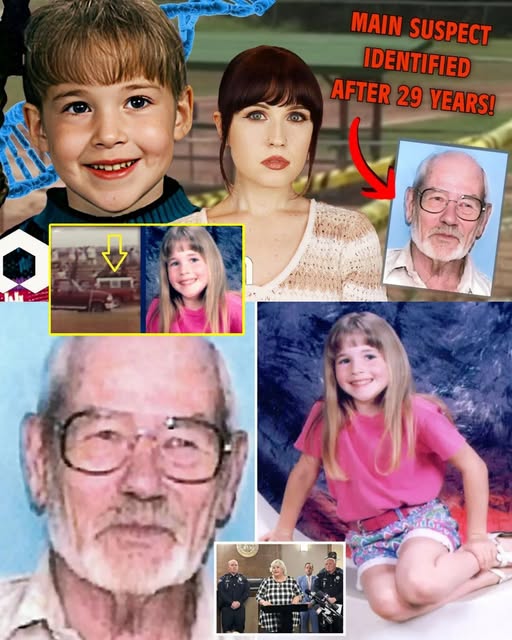
It was a warm June evening in Alma, Arkansas — the kind of night where fireflies lit the outfield and kids laughed past bedtime. Six-year-old Morgan Nick begged her mother, “Just five more minutes, Mom. I want to catch fireflies.”
Her mother, Colleen, smiled. What could go wrong in a small-town baseball field? Fifteen minutes later, the laughter stopped. Morgan was gone. That moment shattered a family, haunted an entire state, and became one of America’s most chilling unsolved abductions. For 29 years, Morgan’s face stared back from missing-child posters, news specials, and age-progression sketches — a symbol of innocence stolen and questions unanswered. But in 2024, a single strand of hair buried deep inside an old red truck whispered a story that no one was prepared to hear. The Night It Happened June 9, 1995. Colleen Nick took Morgan to a local Little League game. At 10:30 p.m., Morgan asked if she could join friends catching fireflies beyond the bleachers.

“Stay where I can see you,” Colleen said. Ten-thirty-five. Ten-forty-five. Morgan’s friends were emptying sand from their shoes near Colleen’s car. They looked up — a man was talking to Morgan. By the time Colleen reached the parking lot, her daughter had vanished. The First Sketch Witnesses described the stranger: White male, mid-20s, six feet tall, mustache, medium build. He was standing beside a red pickup truck with a white camper shell. The sketch spread across Arkansas. Billboards went up. Tips flooded in — thousands of them. But every lead collapsed into dust.

Morgan’s case became a national headline. She was featured on America’s Most Wanted and Unsolved Mysteries. Yet there were no answers — only hope, growing thinner each year. The Mother Who Never Stopped Colleen refused to let her daughter’s name fade. In 1996 she founded the Morgan Nick Foundation, a group dedicated to helping other missing-children families. Arkansas even renamed its missing-child alert system the Morgan Nick Alert, a precursor to the AMBER Alert. While life moved on for most, Colleen kept her home filled with photos of Morgan — her school art, her favorite cat drawings, her first-grade smile frozen in time. Dead Ends and Ghost Leads Over the years, investigators searched far and wide — an empty lot in Booneville, an abandoned house in Oklahoma, even a hidden well.
Then came a name — Billy Jack Links, a local man once accused of kidnapping an 11-year-old girl just months after Morgan vanished. Police questioned him back in 1995 but eventually crossed him off the list. He died in prison in 2000, taking whatever secrets he held to the grave. Still, detectives kept his file on the shelf marked unsolved / pending. Nearly three decades later, Alma Police Chief Jeff Pointer reopened the dusty boxes of evidence. Among them: pieces of a red 1986 Chevy Scottsdale pickup — the same model witnesses saw that night. Inside, investigators found green fabric fibers, blood on the dashboard, and a single blonde hair wedged under a seat bolt. The technology of the ’90s couldn’t make sense of it. But in 2024, science could. The FBI turned to a Texas-based genetic-genealogy lab, Othram Inc. Using forensic-grade genome sequencing, scientists extracted a DNA profile from the hair — even though it lacked a root, something once thought impossible.