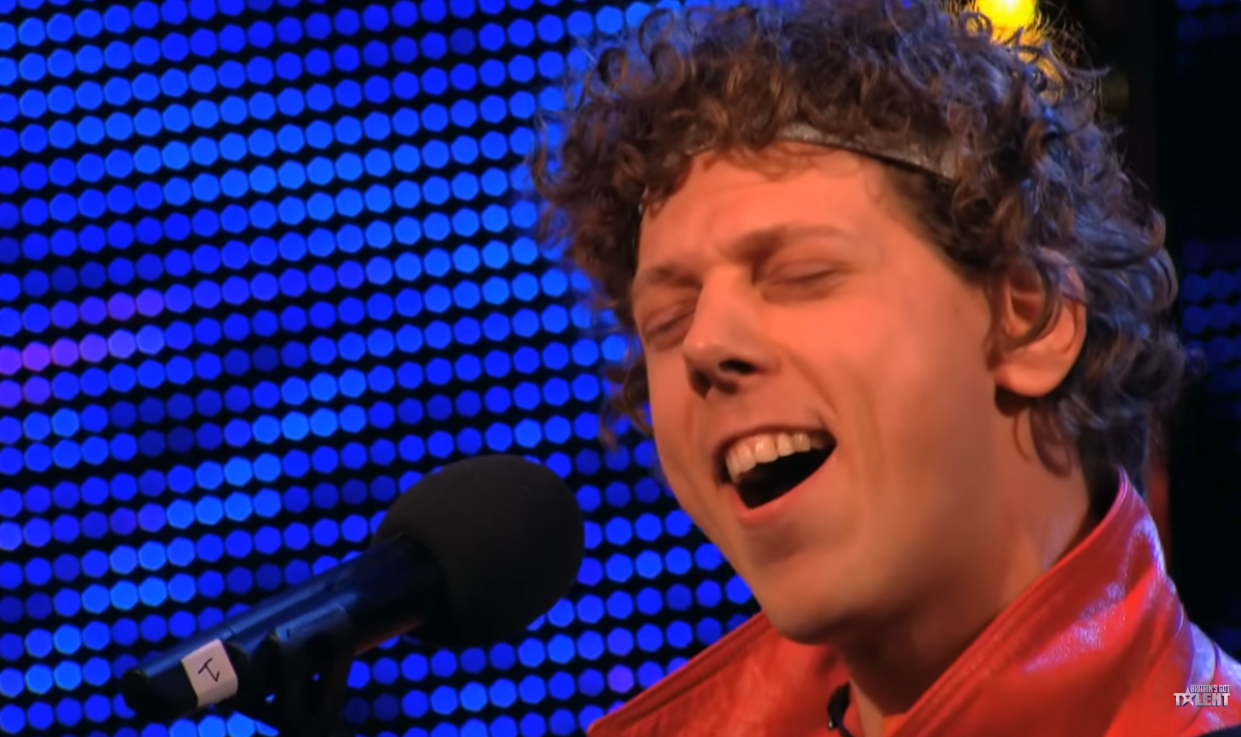
Britain’s Got Talent has welcomed thousands of performers with dreams of becoming stars, but few contestants have arrived with a musical identity as distinctive as Maarty Broekman.
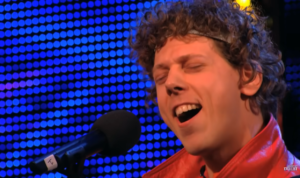
During his 2013 audition, Maarty stepped onto the stage carrying a keytar and made his mission immediately clear: he wanted to bring the sound, fashion and excitement of the 1980s back to modern audiences.
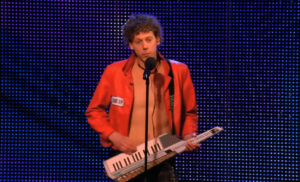
The official Britain’s Got Talent upload describes him as a singer attempting to win over judge Alesha Dixon with his keytar while celebrating his love for the decade’s music.
Instead of performing a conventional ballad or current pop hit, Maarty presented a playful retro act filled with electronic sounds, bright personality and complete commitment to his unusual style.
A Performer Living in the 1980s
The keytar became popular during the 1980s because it allowed keyboard players to move around the stage like guitarists. For Maarty, however, it was more than a nostalgic instrument. It was the center of his musical character.
His personal YouTube profile describes him as a Euro-pop musician with a love for 1980s Euro-disco, its instruments and its visual style.
That passion was visible throughout the audition.
Maarty’s clothing, hairstyle, stage movements and electronic keyboard sounds all belonged to the same retro-inspired world. He did not appear interested in following modern musical trends. Instead, he confidently presented the type of artist he wanted to be.
The performance was energetic, funny and intentionally over-the-top. Maarty also directed much of his attention toward Alesha Dixon, turning the audition into a playful attempt to charm one of the judges.
The Judges Were Divided
Maarty’s unusual performance produced mixed reactions from the judging panel.
Some judges appreciated his confidence, originality and dedication to the 1980s concept. Others appeared less convinced by the singing and keytar routine.
Simon Cowell’s reaction was particularly skeptical, but the act still received enough support to move forward. ITV confirmed that Maarty earned three yes votes during his first audition, while the fourth judge chose not to support him.
The result showed that talent-show success does not always require unanimous approval.
Maarty’s audition was memorable because it created an immediate reaction. Viewers either enjoyed his exaggerated retro personality or questioned whether the act belonged on a major talent-show stage. Either way, he was difficult to ignore.
Originality Became His Biggest Strength
Many contestants enter Britain’s Got Talent hoping to impress the judges with technical perfection. Maarty followed a different strategy.
His greatest strength was his originality.
The combination of Euro-pop, keytar music, humorous lyrics and 1980s fashion made his act instantly recognizable. Even viewers who did not consider him the strongest singer could understand exactly what kind of entertainer he wanted to become.
That clarity helped him stand out in a competition filled with traditional vocalists and familiar cover songs.
Maarty did not simply perform music from an earlier decade. He treated the 1980s as a complete lifestyle and invited the audience into his colorful musical world.
His enthusiasm also gave the performance an entertaining sense of sincerity. The act was humorous, but his love for retro electronic music appeared genuine.
From Audition to the Live Semi-Finals
Maarty’s Britain’s Got Talent journey continued beyond his first appearance.
He eventually reached the fifth live semi-final of Series 7, where he returned with another energetic keytar performance. The official BGT semi-final video introduced him as a “born ’80s entertainer” and continued presenting his retro identity as the defining feature of his act.
Reaching the live shows was a significant achievement for such an unconventional performer.
Maarty competed in a season containing singers, dancers, comedians, magicians and large performance groups. His success showed that a highly specific musical concept could still attract enough support to earn a place on live television.
During the fifth semi-final, he competed against acts including singer Jordan O’Keefe, ventriloquist Steve Hewlett and shadow-theater group Attraction. He finished sixth in the public vote and did not reach the final.
Although his competition ended there, Maarty had already achieved something important: he had introduced millions of viewers to his distinctive keytar-driven character.
Why the Performance Remains Entertaining
Maarty Broekman’s audition continues to attract viewers because it represents the unpredictable side of Britain’s Got Talent.
Audiences often remember the technically strongest performances, but they also remember contestants with unique personalities.
Maarty offered something viewers were unlikely to see anywhere else on the show. He combined retro fashion, theatrical confidence and an instrument strongly associated with an earlier era of pop music.
The performance also created a humorous contrast between Maarty’s enormous confidence and the judges’ uncertain reactions.
He behaved as though the return of the keytar was inevitable, even while Simon Cowell appeared unconvinced. That commitment made the audition more entertaining and helped the audience understand that Maarty was completely comfortable being different.
A Celebration of Euro-Disco Nostalgia
The audition also arrived before the current wave of mainstream nostalgia for vintage synthesizers, neon visuals and 1980s-inspired pop production became as common as it is today.
Maarty openly celebrated those elements in 2013.
His performance reminded viewers of an era when electronic keyboards, drum machines and colorful fashion played a major role in popular music. Instead of treating the decade as something outdated, he presented it as exciting, stylish and ready for a comeback.
Britain’s Got Talent later continued featuring his retro character in additional content, including a lighthearted video teaching viewers how to become an “80s star.”
This showed that even though Maarty did not reach the final, his identity was memorable enough for the program to continue using him in promotional entertainment.
A Keytar Audition Viewers Could Not Forget
Maarty Broekman did not win Britain’s Got Talent, but winning was not the only way to make an impact.
He walked onto the stage with a clear vision, introduced the judges to his eccentric Euro-pop personality and earned three yes votes by refusing to imitate anyone else.
His audition demonstrated that originality can sometimes be more memorable than perfection.
Maarty did not abandon his unusual style to impress the judges. He trusted his keytar, embraced his love of 1980s music and performed with complete confidence.
For a few unforgettable minutes, Britain’s Got Talent stopped feeling like a modern television competition and became a colorful Euro-disco show from another decade.
Maarty came to bring the 1980s back—and at least for one audition, he succeeded.