The news spread across social media in a matter of minutes. A headline appeared on thousands of screens around the world:“RIGHT NOW, PLANE WITH MORE THAN 244 ONBOARD JUST CRASH…” People immediately clicked, shared, and commented. Friends tagged one another. Families worried. News enthusiasts searched for updates. The brief and dramatic wording created a sense of urgency, but it also left many important questions unanswered.
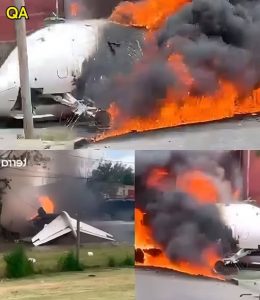
What happened? Where did the aircraft go down? Were there survivors? What caused the accident? As information slowly emerged, a clearer picture began to form. The aircraft had reportedly been carrying more than 244 passengers and crew members during what was expected to be a routine journey. The flight had departed under normal conditions, and according to early reports, there were no indications that anything unusual was happening during the first stages of the trip. Passengers settled into their seats. Some watched movies. Others listened to music or tried to sleep. Flight attendants moved through the aisles, helping travelers and serving refreshments. For most people onboard, it seemed like any other flight. Then something changed. According to preliminary reports, communication between the aircraft and air traffic controllers became irregular. Aviation officials noticed unexpected developments and attempted to establish contact with the flight crew. While exact details remained unclear, concerns quickly grew as radar information suggested that the aircraft was experiencing difficulties. Emergency procedures were initiated. Air traffic controllers worked rapidly to gather information and coordinate with emergency services. Nearby airports were alerted. Rescue teams prepared for a potential crisis. Every minute became increasingly important. Witnesses near the reported crash area later described seeing an aircraft flying unusually low. Some reported hearing strange sounds coming from the engines, while others recalled seeing smoke before the aircraft disappeared from view. Moments later, disaster struck. The aircraft crashed, sending shockwaves through local communities and the global aviation industry. Emergency responders rushed to the scene, where they faced challenging conditions as they searched for survivors and worked to secure the area. Firefighters battled flames. Medical personnel established emergency treatment zones. Police officers secured access roads and coordinated rescue efforts. The scene was chaotic and emotional. Family members of passengers began gathering at airports and information centers, desperately seeking news about their loved ones. Many spent hours waiting for official updates, hoping for positive developments despite the tragic circumstances. Airlines often have emergency response teams specifically trained for situations like these. Counselors, support personnel, and communication specialists were quickly mobilized to assist affected families. Meanwhile, aviation experts started asking the difficult questions. What caused the crash? Was it mechanical failure? Could severe weather have played a role? Was human error involved? Or was there another factor entirely? At this stage, investigators emphasized the importance of patience. Determining the cause of an aviation accident is a complex process that often takes months or even years. Specialized investigators carefully examine wreckage. Flight data recorders, commonly known as black boxes, are recovered and analyzed. Maintenance records are reviewed. Pilot training histories are examined. Weather reports are studied. Every available piece of information becomes part of the investigation. Aviation safety experts explain that modern commercial aircraft are among the safest forms of transportation ever created. Millions of flights occur successfully every year, transporting billions of passengers around the globe. However, when accidents do occur, they attract enormous attention because of their scale and emotional impact. Each aviation accident has historically contributed to improvements in safety procedures, aircraft design, pilot training, and emergency response systems. Many of the safety features passengers take for granted today were developed because investigators learned important lessons from past tragedies. As news coverage continued, social media became flooded with speculation. Some users claimed to know the cause. Others shared unverified videos and rumors. Authorities urged the public to rely on official sources rather than speculation. In major incidents, misinformation can spread quickly, sometimes causing additional distress for families and loved ones already dealing with uncertainty. Experts repeatedly reminded people that early reports are often incomplete and occasionally inaccurate. The priority remained rescue operations and victim identification. Communities around the world expressed sympathy and support. Messages of condolence appeared online in multiple languages. Public figures, organizations, and ordinary citizens offered prayers and encouragement to affected families. Air travel connects people from different nations, cultures, and backgrounds. When a major aviation disaster occurs, the impact often extends far beyond the immediate crash location. Passengers onboard may have been traveling for vacations, business meetings, family reunions, weddings, graduations, or countless other personal reasons. Each passenger had a unique story. Each seat represented a life. Each family waited anxiously for answers. As investigators continued their work, aviation professionals stressed the importance of learning from every available detail. Their goal is not only to determine what happened but also to help prevent similar tragedies in the future. The coming days would likely bring more information. Officials would release verified updates. Investigators would analyze evidence. Families would seek answers. The world would watch closely. For now, one thing remained certain: a flight carrying more than 244 people had become the focus of international attention, reminding everyone of both the remarkable achievements of modern aviation and the profound human impact when tragedy occurs. As the investigation unfolds, people everywhere hope for clarity, accountability, and support for all those affected by this heartbreaking event. The story serves as a powerful reminder that behind every headline are real individuals, real families, and real lives forever changed by a single moment.