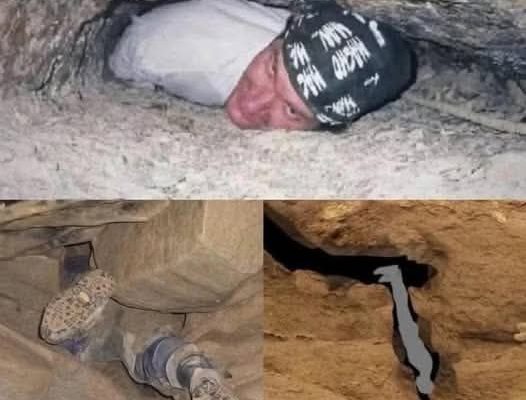
A lone hiker had been reported missing for nearly three days in the rugged mountain wilderness. Search teams had already covered miles of dense forest, steep cliffs, and icy streams, but hope was beginning to fade. Temperatures dropped below freezing at night, and survival without proper shelter grew less likely with every passing hour.
Then, suddenly, a breakthrough. A rescue helicopter spotted movement near a narrow ravine hidden beneath towering pine trees. “He’s there,” the pilot radioed. “I see him.” Relief swept through the rescue team. After seventy-two exhausting hours, they had finally found Daniel Reeves. But finding him would turn out to be the easiest part. The Disappearance Daniel, a 41-year-old outdoor enthusiast, had set out alone for what was supposed to be a short weekend hiking trip. Experienced and well-prepared, he had left detailed plans with family members and carried basic survival gear. When he failed to check in Sunday evening, concern quickly turned into alarm. Search crews mobilized immediately. Volunteers, park rangers, and emergency responders combed the area day and night. Tracking dogs followed faint footprints until heavy winds erased the trail. Rain complicated the search further, turning paths into slippery hazards. By the third day, rescuers knew time was running out. The Discovery From the air, Daniel looked almost impossible to see. He lay wedged between rocks at the bottom of a steep slope, partially covered by branches and debris. The helicopter hovered carefully as rescuers assessed the situation. He was alive. Barely. Daniel raised a weak arm when the helicopter passed overhead, signaling he was conscious. The crew immediately prepared for a hoist rescue, lowering a paramedic down toward him. But as the rescuer approached, the situation became clear. Daniel’s leg was trapped beneath a large fallen tree. What Happened Later investigation revealed that Daniel had slipped while descending a narrow trail. The fall sent him tumbling down the slope before a heavy tree trunk pinned his lower body. Unable to free himself, he had spent three days exposed to cold, hunger, and dehydration. Despite severe injuries, Daniel had managed to conserve energy, using rainwater collected in leaves to stay hydrated. He even built a small signal marker using bright fabric from his backpack—a decision rescuers believe ultimately saved his life. Still, his condition was critical. Hypothermia was setting in, and circulation to his leg had been compromised for hours. The rescue suddenly became a race against time. The Dangerous Rescue Attempt The paramedic reached Daniel and began assessing injuries. “He’s responsive,” came the radio update. “But we need extraction fast.” The problem was the tree. It was too heavy to lift manually, and unstable terrain made cutting it risky. Any sudden shift could worsen Daniel’s injuries—or send rocks sliding down the ravine. Rescuers above coordinated carefully. A second rescuer descended with specialized equipment while the helicopter maintained an incredibly steady hover despite strong mountain winds. Minutes felt like hours. Finally, they began cutting through sections of the fallen trunk, stabilizing it piece by piece. Daniel drifted in and out of consciousness. At one point, he whispered something the paramedic would later repeat to reporters: “I didn’t think anyone would find me.” The Moment Everything Changed Just as rescuers freed his leg, the unexpected happened. A loud cracking sound echoed through the ravine. Loose rocks began sliding downhill. “Move! Rockfall!” someone shouted through the radio. The team had seconds to react. The rescuers shielded Daniel with their bodies as debris rained down around them. Small stones struck helmets and equipment while the helicopter pulled back to avoid danger. For a brief, terrifying moment, communication was lost. Above, the command team held its breath. Then the radio crackled back to life. “We’re okay,” the paramedic said. “Continuing rescue.” That moment changed everything—not only for Daniel, but for the rescuers themselves. The mission had crossed from difficult into dangerous, yet no one considered stopping. The Final Extraction With Daniel finally freed, rescuers secured him into a rescue harness. The helicopter returned, lowering the hoist cable once again. Slowly, carefully, Daniel was lifted from the ravine, spinning slightly as wind rushed around him. Rescuers guided him upward until he disappeared into the aircraft. Applause broke out among the team watching from the command post miles away. After three days missing, Daniel was finally safe. But the rescue wasn’t over yet. The Fight to Survive Inside the helicopter, paramedics worked nonstop. Daniel suffered dehydration, hypothermia, and severe trauma to his leg. Medical crews stabilized him during the flight to the nearest trauma center, where surgeons waited on standby. Doctors later confirmed that rescue teams had arrived just in time. Another few hours without intervention could have proven fatal. After emergency surgery and several days in intensive care, Daniel regained full consciousness. The first thing he asked was simple: “Did someone really come for me?” The Human Side of Rescue For the rescuers, the mission became one they would never forget. Search-and-rescue operations often end without closure. Teams train for harsh realities, knowing not every story has a happy ending. This time was different. One rescuer admitted, “We don’t always get to bring someone home alive. That’s why we do this.” Daniel later met the team who saved him, embracing each person individually. Many described the reunion as emotional beyond words. He learned how dozens of strangers had volunteered their time, risked their safety, and refused to give up searching—even when conditions worsened. Lessons From the Wilderness Daniel’s survival sparked conversations about outdoor safety and preparation. Experts emphasized several key lessons: Always share detailed travel plans. Carry emergency communication devices when possible. Never underestimate changing terrain or weather conditions. Most importantly, survival often depends on staying calm and conserving energy. Daniel’s quick thinking—collecting water and creating visible signals—played a crucial role in keeping him alive long enough to be found. A Second Chance Months later, Daniel returned to the mountains—not to hike alone, but to thank the rescue team at a training event. Standing beside the people who had saved him, he reflected on those long hours trapped in the ravine. “I realized something out there,” he said. “You don’t survive alone. Even when you think you’re isolated, someone is searching, someone is hoping, someone refuses to quit.” The rescue had changed him. He now volunteers to promote hiking safety and supports search-and-rescue programs that rely heavily on community involvement. Hope in the Hardest Moments Stories like Daniel’s remind us that survival often comes down to perseverance—from both the person in danger and the people determined to help. They found him when hope was fading. They risked everything to bring him back. And in the end, the rescue became more than a mission—it became proof of humanity’s willingness to show up for one another, even in the most dangerous and uncertain circumstances. Because sometimes, the most powerful part of a rescue isn’t just saving a life. It’s proving that no one is ever truly forgotten.