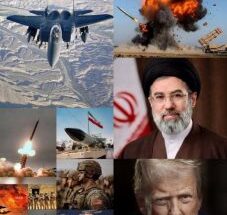
The Middle East entered one of its most dangerous phases in decades when President Donald Trump ordered a powerful U.S. Marine strike force into the operational command of United States Central Command (CENTCOM), signaling Washington’s determination to break Iran’s tightening grip over the world’s most critical oil artery — the Strait of Hormuz.The Strait of Hormuz is not just another shipping lane. It is the beating heart of global energy trade. Nearly 20% of the world’s oil supply passes through this narrow corridor connecting the Persian Gulf to international markets. When Iran disrupted maritime traffic during the ongoing conflict, oil markets shook immediately. Insurance rates surged, shipping slowed, and fears of a worldwide energy crisis intensified. Iran’s strategy relied on asymmetric warfare: drones, mines, missile threats, and harassment of commercial vessels. The objective was simple — make the strait too dangerous to use without firing a full-scale conventional war. U.S. military planners viewed this as a direct challenge to freedom of navigation and global economic stability. Why Trump Deployed Marines The Marine deployment was designed to change the battlefield calculus. Unlike naval patrols alone, Marine Expeditionary Units bring rapid assault capability, amphibious operations, aviation support, and crisis-response flexibility. Reports indicated thousands of Marines were positioned aboard amphibious assault ships capable of launching helicopters, fighter jets, and landing forces within hours. The deployment served several strategic purposes: Protect commercial shipping routes Deter Iranian naval and missile activity Prepare seizure or defense of strategic islands Support ongoing naval blockade operations Provide options for escalation if diplomacy fails The message from Washington was unmistakable: the United States would not allow Iran to control a global energy chokepoint. CENTCOM’s Expanding Mission CENTCOM already oversaw U.S. operations across the Middle East, but the conflict dramatically expanded its responsibilities. American forces began enforcing a maritime blockade targeting Iranian shipping. According to military statements, dozens of vessels attempting to enter or leave Iranian ports were redirected, demonstrating growing enforcement pressure on Tehran’s economy and military logistics.
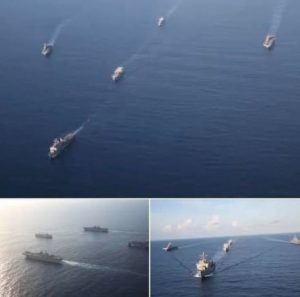
(Anadolu Agency) This blockade represented more than symbolic pressure — it aimed to isolate Iran while keeping international sea lanes open. As tensions rose, U.S. forces also carried out retaliatory strikes against Iranian military facilities following alleged attacks on American naval assets near the strait. (Moneycontrol) The conflict was rapidly shifting from deterrence to active confrontation. Iran’s Strategy: Control Without Full War Iran understood it could not defeat the United States in conventional warfare. Instead, it focused on leverage. By threatening the Strait of Hormuz, Tehran gained influence far beyond its military size. Even limited disruptions sent oil prices soaring and forced world leaders into emergency diplomacy. Iranian forces relied on: Fast attack boats operating in swarms Coastal missile batteries hidden along the shoreline Naval mines capable of closing shipping lanes Proxy groups targeting regional allies This approach allowed Iran to pressure Washington while avoiding direct large-scale battles. But once Marines entered the equation, the strategic balance began to shift. The Marine Expeditionary Concept Marine Expeditionary Units are designed for exactly this kind of crisis. They can: Conduct amphibious landings on contested islands Secure ports and infrastructure Rescue trapped civilians or commercial crews Neutralize missile launch sites near coastlines Military analysts speculated that Marines could secure key islands surrounding the strait, effectively boxing in Iranian naval operations and reopening shipping lanes. Even without launching an invasion, their presence dramatically increased U.S. leverage. Ceasefires, Strikes, and a Fragile Peace Ironically, the Marine deployment occurred during a fragile ceasefire period. Negotiations between Washington and Tehran had stalled, while intermittent exchanges of fire threatened to collapse diplomacy entirely. Reports described a “dizzying” week in which ceasefire conditions deteriorated amid new strikes and military maneuvers. (The Guardian) Both sides appeared to pursue parallel strategies: Public diplomacy to avoid global panic Military positioning in case talks failed This dual-track approach left the region on edge. Global Economic Shockwaves The stakes extend far beyond the Middle East. When Hormuz traffic slowed: Oil prices surged worldwide Inflation fears returned Shipping insurance costs skyrocketed Energy-importing nations faced economic stress European and Asian economies watched closely, knowing a prolonged closure could trigger a global recession. For the United States, reopening the strait became both a military objective and an economic necessity. Risks of Escalation Sending Marines into an active conflict zone carries enormous risk. Potential flashpoints include: Miscalculation between naval forces Missile strikes on U.S. ships Proxy attacks on American bases Cyber retaliation targeting infrastructure Even a single deadly incident could rapidly expand the war beyond regional limits. Critics warned that placing ground-capable forces so close to Iran might blur the line between deterrence and invasion. Supporters argued the opposite — that strength prevents war by convincing adversaries escalation would fail. Strategic Messaging to Allies and Rivals The deployment was also geopolitical signaling. To allies in the Gulf, it reassured governments that U.S. security guarantees remained intact. To adversaries like Russia and China, it demonstrated Washington’s willingness to protect global trade routes militarily. And domestically, it reinforced Trump’s long-standing doctrine: economic pressure backed by visible military strength. What Happens Next? Three possible outcomes now shape the future: 1. Negotiated De-escalation Diplomatic talks succeed, Iran reduces pressure, and shipping resumes under international monitoring. 2. Controlled Military Standoff U.S. forces maintain dominance while Iran continues limited resistance without triggering full war. 3. Major Regional Conflict A single misstep ignites broader warfare involving multiple Middle Eastern states. The Marine strike force gives Washington options across all three scenarios — deterrence, enforcement, or rapid escalation if required. The Bigger Picture The struggle over the Strait of Hormuz is ultimately about power, not territory. Control of energy routes equals geopolitical influence. Whoever guarantees the flow of oil influences the global economy itself. By sending Marines into CENTCOM’s operational theater, Trump transformed the crisis from a naval standoff into a multidomain confrontation involving land, sea, air, and economic warfare. Whether history remembers the move as decisive leadership or a dangerous gamble will depend on what happens next in one of the world’s most volatile regions. For now, the message from Washington is clear: the Hormuz chokehold will be challenged — and the United States is prepared to use every tool available to break it.