Social media is often flooded with dramatic headlines designed to capture attention in just a few words. One such headline reads: “USS Rodney M. Davis (FFG-60) Sink After Hit by…” The unfinished sentence invites readers to click, assuming that a major naval disaster has just occurred. However, before accepting such claims as fact, it is important to understand the history of the ship and separate verified information from sensational rumors.The USS Rodney M. Davis (FFG-60) was an Oliver Hazard Perry-class guided-missile frigate of the United States Navy. Commissioned in 1987, the vessel was named after Marine Sergeant Rodney Maxwell Davis, who was posthumously awarded the Medal of Honor for his extraordinary heroism during the Vietnam War. Throughout its years of active service, the frigate participated in numerous missions across the globe, helping protect maritime security and support allied naval operations.
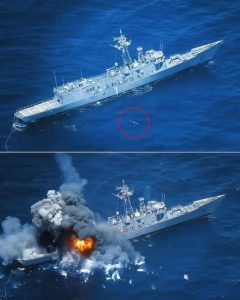
Like many warships built during the Cold War, USS Rodney M. Davis was designed to perform a wide variety of missions. It escorted larger vessels, protected shipping lanes, conducted anti-submarine warfare, and carried out air-defense operations. Equipped with guided missiles, radar systems, helicopters, and advanced communications equipment for its time, the ship served as an important asset in the U.S. Navy’s fleet. Over the course of its career, the frigate participated in exercises with allied nations, humanitarian missions, and security patrols. Its crew consisted of highly trained sailors who spent months at sea carrying out demanding operations. Life aboard a frigate required teamwork, discipline, and constant readiness, whether responding to emergencies or participating in international naval exercises. Despite its long service, rumors occasionally circulate online claiming that USS Rodney M. Davis was suddenly destroyed in combat. Headlines often suggest that the ship was “hit,” “sunk,” or “lost” during a military confrontation. These claims are usually presented without evidence, official confirmation, or credible reporting. In reality, there is no verified evidence that USS Rodney M. Davis was sunk in combat after being struck by an enemy weapon. Instead, the ship completed decades of honorable service before eventually being retired from active duty as part of the Navy’s modernization efforts. As newer classes of warships entered service, many Oliver Hazard Perry-class frigates were decommissioned because maintaining aging vessels became increasingly expensive. Military ships rarely remain in service forever. Advances in radar technology, missile defense systems, electronic warfare capabilities, and propulsion make newer ships far more capable than vessels built several decades earlier. Retirement does not necessarily reflect failure; rather, it is a normal part of fleet management. Following decommissioning, former naval vessels may have several possible futures. Some are transferred to allied navies, where they continue serving under a different flag. Others become museum ships that preserve naval history for future generations. Some are intentionally sunk during carefully planned military exercises known as SINKEX events. In these exercises, retired ships serve as realistic targets, allowing military forces to evaluate weapons and improve combat readiness under controlled conditions. When a retired ship is intentionally sunk during an exercise, it differs greatly from being destroyed unexpectedly in wartime. Environmental preparations are carried out beforehand to remove hazardous materials, and the sinking is planned with strict safety procedures. The internet often blurs these distinctions. A photograph of a ship sinking during a scheduled exercise may later be shared with a misleading caption claiming it was destroyed during an ongoing conflict. Without checking reliable sources, readers may mistakenly believe they are witnessing breaking news. This illustrates why media literacy has become increasingly important. Eye-catching headlines are designed to generate clicks, shares, and advertising revenue. They frequently omit critical details, use vague wording, or rely on emotional language to encourage readers to open the article before learning the facts. Credible reporting on naval incidents typically comes from official military statements, established news organizations, or government sources. When an actual warship is damaged or lost, multiple reputable outlets generally report the event quickly, supported by photographs, official announcements, and independent verification. The service of USS Rodney M. Davis deserves to be remembered for its contributions rather than distorted by misleading online rumors. Thousands of sailors served aboard the frigate throughout its operational history. Their work included protecting maritime commerce, strengthening alliances, participating in international exercises, and responding whenever their nation required their service. Military vessels represent years of engineering, planning, and dedication. Behind every ship are sailors, maintenance crews, shipbuilders, logisticians, and families who support those serving at sea. Sensational claims that ignore these realities can easily spread misinformation while overshadowing the genuine achievements of those who served. The rapid spread of social media has made it easier than ever for false stories to circulate. Images can be taken out of context, old photographs reused, and incomplete headlines shared millions of times before anyone verifies the information. Readers should always pause before sharing dramatic military news and look for confirmation from multiple reliable sources. Critical thinking is one of the best defenses against misinformation. Asking simple questions—Who reported this? Is there official confirmation? Are multiple trusted organizations covering the story?—can prevent the spread of inaccurate claims. In the case of USS Rodney M. Davis (FFG-60), the available historical record does not support viral claims that it was suddenly sunk after being hit in combat. Instead, the ship served the United States Navy for many years before being retired as part of the normal lifecycle of military vessels. The true legacy of USS Rodney M. Davis is not one of mystery or sensational headlines, but of decades of dedicated naval service. Remembering that history accurately honors both the ship and the men and women who served aboard her.